
Disclosure: As an Amazon Associate I earn from qualifying purchases. How this site works
Built-In vs Separate Grinder
Compare actual purchase and service costs, usable counter space and adjustment range. Integrated and separate setups offer different workflows; neither has a universal price or quality advantage.
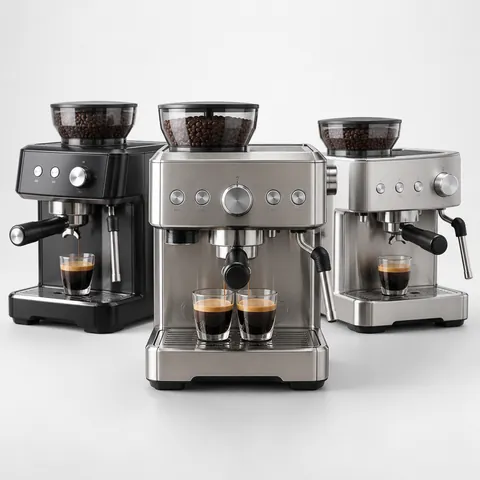 Espresso machines with built-in grinders
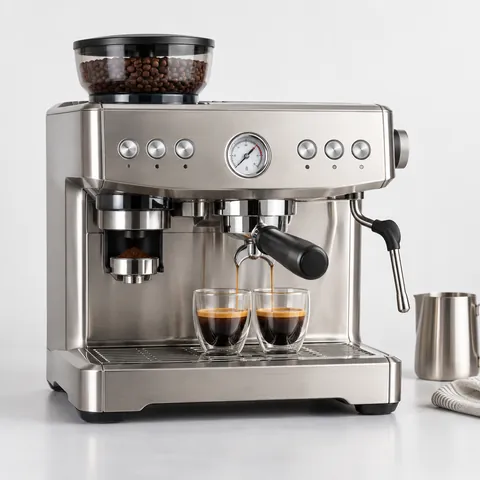 Dual-boiler machines with grinders
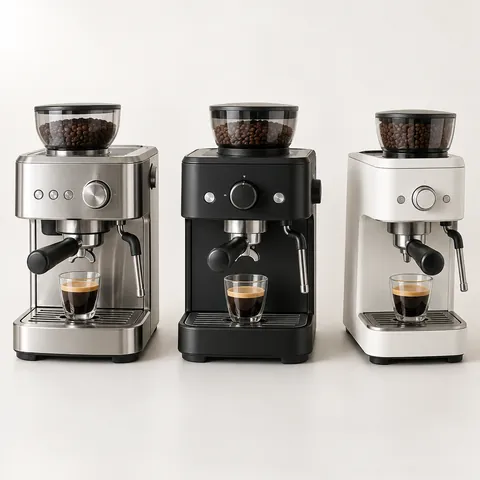 Compact espresso machines with grinders
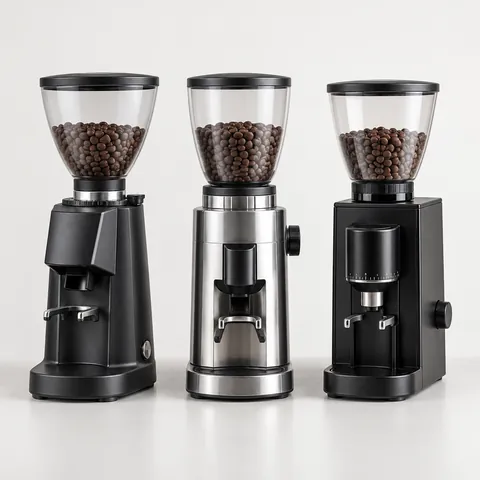 Standalone espresso grinders
Side by side
| Built-in grinder | Separate grinder | |
|---|---|---|
| Counter space | One footprint | Two appliances |
| Cost | Compare exact machine price and included equipment | Compare machine plus grinder and required accessories |
| Grind range | Tuned for espresso | Often wider range, finer steps |
| Upgrades | Check whether a separate grinder can be used later | Components can be selected separately |
| Repairs | Service may affect the whole appliance; verify terms | One component may need service; workflow still depends on both |
| Heat | Grinder near warm parts | Isolated |
Which to choose
- Choose built-in for convenience, limited space and a simpler setup.
- Choose separate if you want to experiment with many coffees, brew methods or future upgrades.
Compare machines with built-in grinders and standalone espresso grinders.
Is a built-in grinder good enough for real espresso?
A built-in grinder can make proper espresso if it can grind fine enough, adjust in small steps, and deliver a reasonably consistent dose. The machine still needs fresh coffee, a suitable basket, an even tamp, and enough control over shot time. The weak point is not that the grinder is inside the machine; it is whether that specific grinder gives you enough control to dial in the coffee you like.
- Look for burrs rather than blades. Espresso needs a fine, repeatable grind, and blade grinders are not appropriate for dialing in espresso.
- Check how the grind adjustment works. More steps, smaller steps, or stepless adjustment make it easier to correct a shot that runs too fast or too slow.
- Check whether the grinder doses by time, weight, or manual start and stop. Timed dosing can be convenient, but you may still need a scale to confirm how much coffee is actually in the portafilter.
- Consider retention. If old grounds sit in the chute, the first shot of the day may taste different unless you purge a small amount.
- Think about beans. If you switch between regular and decaf often, a separate grinder or single-dose workflow is usually easier than emptying a built-in hopper.
Built-in grinders are usually best for a household that uses one main espresso bean and values speed. If you regularly change roast levels, brew espresso plus pour-over, or want to fine-tune every variable, a separate standalone espresso grinder gives you more room to adjust.
How should I decide based on my kitchen and routine?
Before comparing features, map the daily routine. A grinder choice that works for one cappuccino every morning may be frustrating for a household making back-to-back drinks, decaf at night, and drip coffee on weekends.
- Measure the space. Include width, depth, height under cabinets, and space to remove the water tank, bean hopper, drip tray, and portafilter.
- Decide where grounds will fall. A built-in setup keeps grinding and brewing in one area. A separate grinder needs its own mat or tray and enough room to move the portafilter without spilling.
- Count the drinks you make in a row. More drinks make convenience, hopper capacity, and easy cleanup more important.
- List your coffee habits. One espresso blend favors built-in simplicity. Multiple coffees, decaf, and non-espresso brewing favor a separate grinder.
- Decide how much you want to upgrade later. If you like to keep improving the setup, buying the grinder separately gives you more options.
If the real limit is counter depth or cabinet clearance, start with compact espresso machines with grinders and check the manufacturer dimensions carefully. If the real limit is learning curve, a built-in grinder may reduce the number of separate decisions you have to make, even though you still need to learn grind size, dose, and shot timing.
What specs matter when comparing built-in and separate grinders?
Spec sheets can be confusing because grinder quality is not defined by one number. Use the table below to focus on practical details that affect daily espresso.
| Spec or feature | What to look for | Why it matters |
|---|---|---|
| Adjustment range | Fine espresso settings with small changes between settings | Makes it easier to slow down or speed up a shot without overshooting |
| Burr access | A way to remove or reach the burr area for cleaning | Coffee oils and fine grounds build up over time |
| Dose control | Timed, manual, or weight-based dosing that you can repeat | A consistent dose makes shot troubleshooting much easier |
| Portafilter support | A cradle that holds the portafilter level and centered | Reduces mess and helps grounds land evenly in the basket |
| Hopper design | A lid that seals reasonably well and a chute that can be cleared | Helps keep beans fresher and reduces stale grounds |
| Grind path | Short, easy-to-clean path from burrs to portafilter | Less retention means fewer old grounds in the next shot |
| Serviceability | Clear cleaning instructions and available replacement parts | A grinder problem should not make the whole setup hard to maintain |
Do not judge the grinder only by the number of grind settings. A grinder with many coarse settings but few useful espresso settings can still be hard to dial in. Also check whether the machine allows internal calibration or a wider fine range, because some built-in grinders have an adjustment inside the burr area in addition to the outside dial.
When is a separate grinder worth it?
A separate grinder is worth considering when the grinder is the part you expect to outgrow first. Espresso quality is highly sensitive to grind size and consistency, so a better grinder can be a more meaningful upgrade than extra drink presets or a larger display.
- You like light roasts, which often need finer grinding and careful adjustment.
- You switch between several coffees and want to purge less or single-dose more easily.
- You make both espresso and other brew methods and need a wider grind range.
- You want to keep the espresso machine for years but upgrade the grinder sooner.
- You want the option to repair or replace one piece without losing the whole setup.
A separate grinder does add another cord, another footprint, and another cleaning task. It can also make the setup feel less tidy. For many kitchens, the trade-off is worth it only if you will actually use the extra control.
If you are already looking at higher-control machines, compare grinder options alongside the machine rather than after the fact. A dual-boiler setup, for example, may make sense for back-to-back milk drinks, but it still needs a grinder that can keep up. Start with dual-boiler machines with grinders only if the combined footprint and workflow fit your counter.
How to get better results with either setup
Built-in and separate grinders both benefit from the same habits. The goal is to make one change at a time so you know what fixed the shot.
- Use a scale to weigh the dose in the basket and the espresso in the cup.
- Keep the dose steady while adjusting grind size. Change only the grind when the shot is too fast or too slow.
- Purge a small amount after a grind adjustment, especially if the grinder retains grounds.
- Distribute the grounds evenly before tamping. Uneven coffee can channel even when the grind size is correct.
- Clean the chute, burr area, portafilter, and basket on a regular schedule. Old oils and compacted fines can affect taste and flow.
- Store beans in a sealed container away from heat and light. Do not use the hopper as long-term storage if it holds more coffee than you use soon.
If shots suddenly run faster, check bean age, dose, basket fill, and tamp before assuming the grinder is failing. If shots run slower after cleaning, old compacted grounds may have been affecting the previous setting, so you may need to dial in again.
Frequently asked questions
Do built-in grinders break more often than separate grinders?
Not automatically, but a built-in grinder creates a bigger inconvenience when it needs service because the grinder and espresso machine are in one unit. With separate equipment, a grinder issue usually does not stop you from servicing or using the machine itself, depending on the problem.
Can I use pre-ground coffee in a machine with a built-in grinder?
Many machines with built-in grinders also allow pre-ground coffee, but the process varies by model. Check whether the machine has a bypass doser or whether you need to add grounds directly to the portafilter. Pre-ground coffee goes stale quickly and may not be fine enough for good espresso.
Is a built-in grinder better for beginners?
It can be better for beginners who want a cleaner counter and fewer separate purchases. It does not remove the need to learn dose, grind size, shot time, and cleaning. A beginner who wants to experiment may still prefer a separate grinder from the start.
Can one grinder handle espresso and drip coffee?
Some separate grinders can cover both ranges, but switching back and forth can waste coffee and require re-dialing. Built-in espresso grinders are usually intended for espresso settings, not a full range of brew methods. If you make drip coffee often, a separate grinder with a broad range is usually more practical.
Should I single-dose with a built-in grinder?
You can single-dose with some built-in grinders, but not all are designed for it. Hoppers and grind paths may retain beans or grounds, and the grinder may dose less consistently with very small amounts. If single-dosing is important, check the manual and user workflow before buying.
Disclosure: As an Amazon Associate I earn from qualifying purchases. This site may earn a commission when you buy through its links, at no extra cost to you. Product details come from public manufacturer information; always check the merchant page for current specifications and prices. We have not hands-on tested the products described here.