Disclosure: As an Amazon Associate I earn from qualifying purchases. How this site works
Where to Buy an Espresso Machine with Grinder
These links open current Amazon category search results. Confirm the exact model, voltage, included grinder and baskets, current price, warranty and returns. We have not hands-on tested these machines.
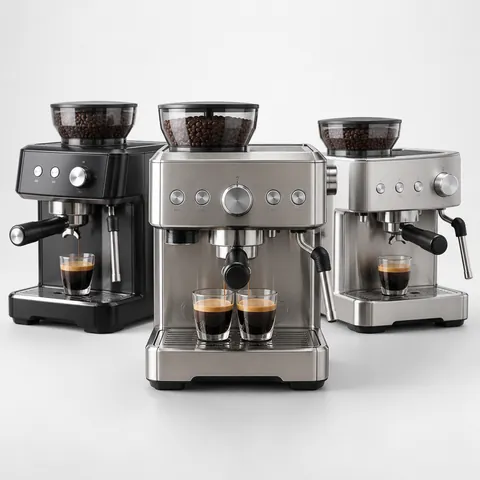 Espresso machines with built-in grinders
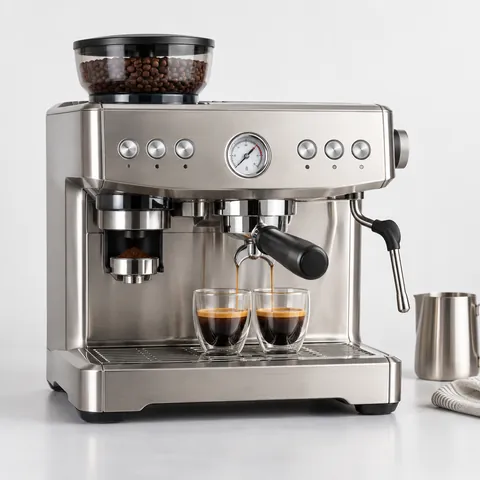 Dual-boiler machines with grinders
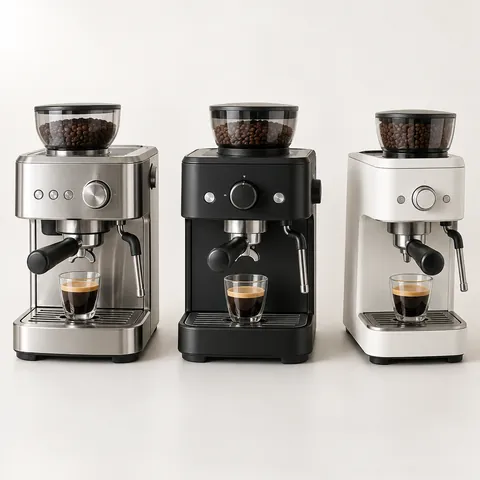 Compact espresso machines with grinders
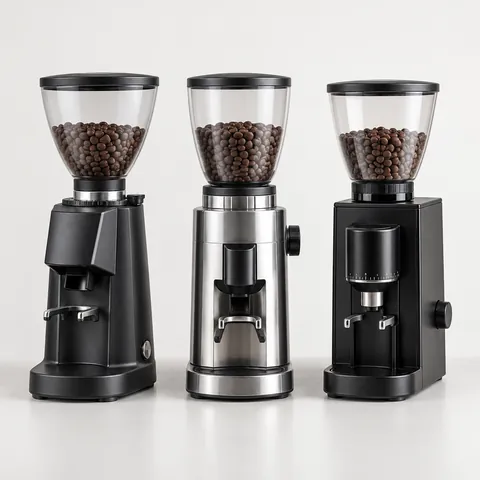 Standalone espresso grinders
Before you buy
- Check grinder type and settings.
- Confirm heating system and warm-up time.
- Check portafilter size and baskets included.
- Measure your counter and cabinet height.
- Read warranty, service and return terms.
Categories referenced on this site
- Espresso machines with built-in grinders
- Dual-boiler machines with grinders
- Compact espresso machines with grinders
- Standalone espresso grinders
In store
Ask for a demonstration of grinding, brewing and steaming, and check how easy the hopper, drip tray and water tank are to remove.
Where is the best place to buy an espresso machine with grinder?
The best place to buy depends on whether you want convenience, hands-on help, or easier returns. A large online marketplace can make it simple to compare many machines side by side, while a local kitchen store or espresso retailer may be better if you want to see the machine, hear the grinder, and ask service questions before paying.
| Place to buy | Best for | What to watch |
|---|---|---|
| Large online marketplace | Broad selection, quick comparison, customer photos, frequent inventory changes | Confirm the seller, return window, voltage, included accessories, and whether the listing is new, used, or renewed |
| Specialty coffee retailer | Better pre-sale advice, espresso-specific support, accessory recommendations | Selection may be narrower, and return rules may be stricter once water has been run through the machine |
| Local kitchen or appliance store | Seeing size and finish in person, checking controls, asking for a demo | The display model may not match the exact bundle or color available for delivery |
| Warehouse club or big-box store | Simple returns and occasional bundles | Fewer grinder-focused details may be shown on the shelf tag or product page |
| Used or open-box marketplace | Lower upfront cost | Higher risk of missing parts, scale buildup, worn burrs, or no manufacturer warranty |
If you are still narrowing the category, start with espresso machines with built-in grinders to see the common all-in-one layout. If you already know you want faster milk steaming and brewing control, compare dual-boiler machines with grinders separately because they are usually larger and more complex.
How do you check an online listing before you buy?
Before checkout, treat the product page like a contract. Do not rely only on the title or the main photo, because bundles, model years, colors, and included accessories can vary by seller. Read the full listing and save a copy of the details if the purchase is expensive or the return policy has conditions.
- Match the model name and finish shown in the title, photos, and specification section. If one part of the listing says a different color, voltage, or bundle, ask the seller before ordering.
- Check whether the item is sold by the retailer, the manufacturer, or a third-party seller. For warranty help, the seller of record can matter as much as the store name on the page.
- Look for the condition label. New, open-box, renewed, refurbished, and used do not mean the same thing, and they may have different return or warranty terms.
- Read what is included in the box. Confirm the portafilter, baskets, tamper, milk pitcher, cleaning tools, water filter, and manuals if those items matter to you.
- Review the return process, not just the length of the return window. A heavy espresso machine can be inconvenient to rebox, and some sellers may require original packaging.
- Check delivery details. For apartment buildings or tight entries, note whether delivery is to your door, lobby, mailroom, or curb.
- Scan recent customer questions and reviews for recurring listing problems such as missing accessories, confusing bundles, or damaged packaging. Use reviews to spot patterns, not to treat one complaint as proof.
For smaller kitchens, also compare the stated width, depth, and height against your measured space, then allow room to lift the bean hopper lid, remove the water tank, and slide out the drip tray. If the machine will live under wall cabinets, a compact category such as compact espresso machines with grinders may be easier to use every day than a taller machine with the same brewing features.
What buying details matter most beyond the machine specs?
Specifications tell you what the machine is supposed to do. Buying details tell you what happens if it arrives damaged, does not fit, or needs service. For a countertop appliance with a grinder, those practical terms can be the difference between an easy purchase and a frustrating return.
- Return condition: Some retailers accept returns only if the machine is clean, complete, and in original packaging. Keep all inserts, bags, and foam until you know you are keeping it.
- Water-use rules: Once a machine has been filled and used, it may be treated differently from an unopened appliance. Read the policy before you pull shots.
- Restocking fees: Look for any fee that applies to opened, used, or special-order items. If the policy is unclear, ask in writing.
- Warranty start date: The warranty usually begins at purchase, not first use. Keep the receipt and order confirmation in the same place as the manual.
- Authorized seller status: Some manufacturers limit warranty support to authorized sellers. If the product page does not make this clear, check the manufacturer’s dealer information or contact support.
- Replacement parts: A machine is easier to live with when common parts such as baskets, gaskets, water filters, cleaning tablets, and drip tray pieces are easy to find.
- Shipping damage process: Heavy appliances can be damaged in transit. Inspect the box before opening, photograph damage, and test for obvious leaks or broken parts within the return window.
- Electrical requirements: Most home espresso machines plug into a standard household outlet, but you should still confirm voltage, plug type, and intended market before buying online.
If you plan to upgrade later, consider whether you want the grinder built in or separate. A built-in grinder saves space and simplifies the setup, while a separate grinder can be easier to replace or upgrade without replacing the espresso machine.
Should you buy new, refurbished, open-box, or used?
Buying new is usually the lowest-risk option when you want the clearest warranty and return path. Refurbished, open-box, and used machines can make sense, but only if you are comfortable checking condition carefully and accepting more uncertainty.
| Condition | Potential advantage | Main risk |
|---|---|---|
| New | Fullest expectation of complete accessories, clean water path, and standard warranty terms | Higher upfront cost than used or open-box |
| Open-box | May be unused or lightly handled | Could be missing accessories, packaging, or documentation |
| Manufacturer refurbished | May include inspection and a stated refurbished warranty | Warranty may be shorter or different from a new unit |
| Seller refurbished | Can be less expensive than new | Quality depends heavily on who did the work and what was replaced |
| Used | Lowest upfront cost in many cases | Unknown maintenance, scale buildup, grinder wear, leaks, or no warranty |
- Ask for clear photos of the group head, portafilter, drip tray, water tank, steam wand, grinder chute, hopper, and serial number area.
- Ask whether the machine has been descaled and cleaned with the proper products for that model. Avoid sellers who cannot describe basic maintenance.
- Look for signs of leaks, corrosion, cracked plastic, damaged cords, stripped screws, or a sour smell from old water or milk residue.
- For a built-in grinder, ask whether the burrs have been replaced or cleaned and whether the grind adjustment moves smoothly.
- Confirm that all removable parts are included. Replacing small missing items can be annoying, especially if parts are backordered.
A used espresso machine can be a good buy for someone comfortable with maintenance. For a first-time buyer who wants predictable support, a new machine from a clear seller is usually easier.
What should you do when the machine arrives?
Open and inspect the machine while you are still inside the return window. Do not throw away packaging until you have checked fit, parts, power, water flow, grinder operation, and basic steaming.
- Compare the contents against the manual or product page. Set aside every basket, cleaning tool, filter, scoop, pitcher, and insert before recycling anything.
- Place the machine in its intended spot and confirm that you can access the water tank, bean hopper, drip tray, power cord, and controls.
- Wash removable food-contact parts according to the manual before first use.
- Run the manufacturer’s first-use rinse or priming steps before making coffee.
- Test the grinder with a small amount of beans and listen for unusual scraping or stalling.
- Pull a basic shot and run the steam wand with water or a small amount of milk to confirm that the main functions work.
- Register the product if the manufacturer recommends it, and store proof of purchase digitally.
If something is wrong, stop using the machine and contact the seller promptly. Continued use can make a return more complicated if the issue is a shipping defect, missing part, or incorrect item.
Frequently asked questions
Is it better to buy an espresso machine with grinder online or in a store?
Buy online if you want the widest selection and time to compare specifications, seller terms, and user photos. Buy in store if you want to judge the size, noise, controls, and build feel before paying. Either way, the return policy and warranty support matter as much as the place of purchase.
Can I return an espresso machine after using it?
Sometimes, but policies vary by retailer and seller. Some allow returns after light use if the machine is clean and complete, while others treat used water appliances more strictly. Read the return rules before filling the tank or grinding beans.
Is an espresso machine with a built-in grinder worth buying?
It can be worth buying if you want a cleaner counter setup and do not want to choose a separate grinder. The trade-off is that the grinder and machine are tied together, so upgrading one part later is harder. If you like changing equipment over time, a separate grinder may be more flexible.
What should I avoid when buying a used espresso machine?
Avoid machines with unknown history, missing parts, visible leaks, damaged cords, heavy scale, or unclear seller photos. Be cautious if the seller cannot show the machine powered on, pumping water, and producing steam. For machines with built-in grinders, also check that the grinder adjusts smoothly and does not sound damaged.
Do I need to buy accessories at the same time?
You do not need every accessory on day one, but you should make sure the machine includes the parts required to brew safely. Useful add-ons may include cleaning supplies approved for the machine, extra water filters, a milk pitcher, and a scale. Wait on specialty accessories until you know the portafilter size and your daily routine.
Disclosure: As an Amazon Associate I earn from qualifying purchases. This site may earn a commission when you buy through its links, at no extra cost to you. Product details come from public manufacturer information; always check the merchant page for current specifications and prices. We have not hands-on tested the products described here.